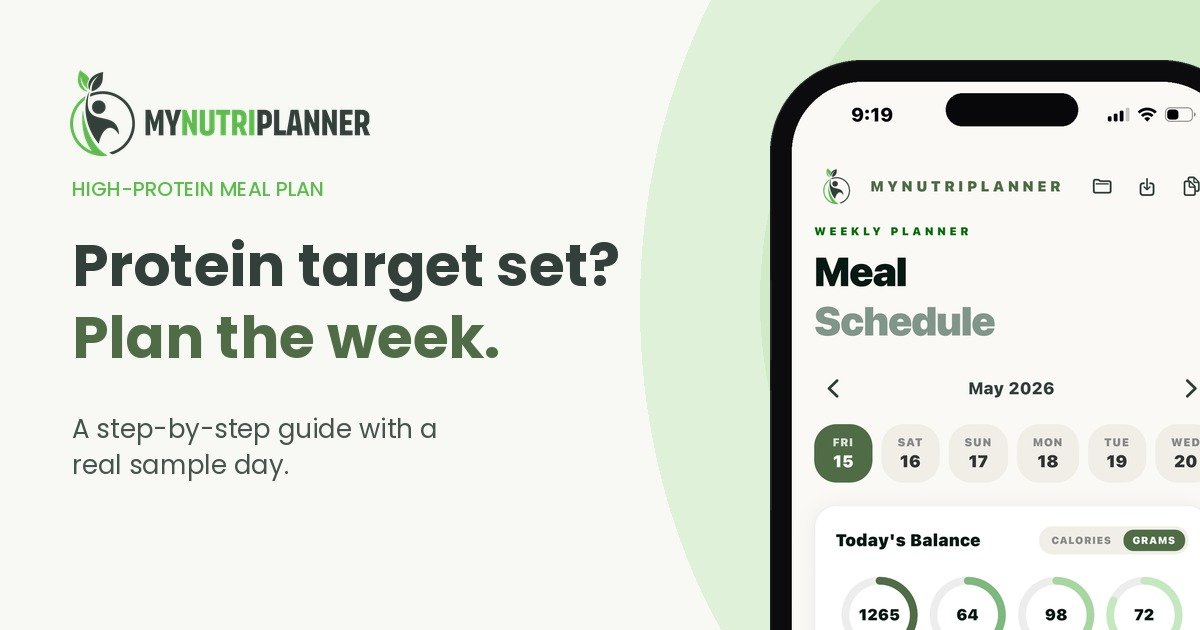
A high-protein meal plan isn’t a special menu. It’s a normal week of meals with the protein worked out on purpose: a number for the day, a smaller number for each meal, and a short list of foods that deliver it.
This guide shows how to build a high-protein meal plan for the week in five steps, with a real sample day built from foods you can check against USDA data. It takes one evening to set up, and most of it repeats.
What “high-protein” actually means
Two public benchmarks are worth knowing. The Recommended Dietary Allowance (RDA) for protein is 0.8 grams per kilogram of body weight per day, and the acceptable range for protein is 10–35% of calories [1]. The Dietary Guidelines for Americans, 2025–2030 set a protein goal of 1.2–1.6 grams per kilogram per day and say to prioritize protein foods at every meal [2].
For a 70 kg (154 lb) adult, 1.2–1.6 g/kg works out to about 84–112 grams a day. That’s an example, not a prescription. Your own number depends on your body size, activity and preferences, and a macro calculator is a quick way to see where you land.
Step 1: Turn the daily number into a per-meal number
A daily target of 100 grams is hard to plan around. A lunch with 30 grams in it is easy. So divide the day first, before you pick any food.
A simple split for three meals and a snack:
| Meal | Protein |
|---|---|
| Breakfast | ~25 g |
| Lunch | ~30 g |
| Snack | ~10–15 g |
| Dinner | ~35 g |
This follows the guidelines’ advice to put protein at every meal rather than saving it for dinner [2]. It also means a light breakfast doesn’t force a 90-gram dinner.
Step 2: Pick protein anchors you’ll actually eat
An anchor is the protein food each meal is built around. Choose a few you like and rotate them. USDA data gives these rounded values per serving [3]:
| Food | Serving | Protein |
|---|---|---|
| Egg, large | 1 | 6.3 g |
| Yogurt, plain, low fat | 1 container (6 oz) | 8.9 g |
| Cottage cheese, 1% milkfat | 4 oz | 14 g |
| Salmon, pink, canned, drained | 3 oz | 19.6 g |
| Turkey breast, roasted | 3 oz | 25.6 g |
| Tofu, firm, made with calcium sulfate | ½ cup | 21.8 g |
| Black beans, cooked | 1 cup | 15.1 g |
| Edamame, frozen | 1 cup | 13.2 g |
Variety counts. The Dietary Guidelines list eggs, poultry, seafood and red meat alongside beans, peas, lentils, nuts, seeds and soy [2], so a plan can lean on whichever mix suits you.
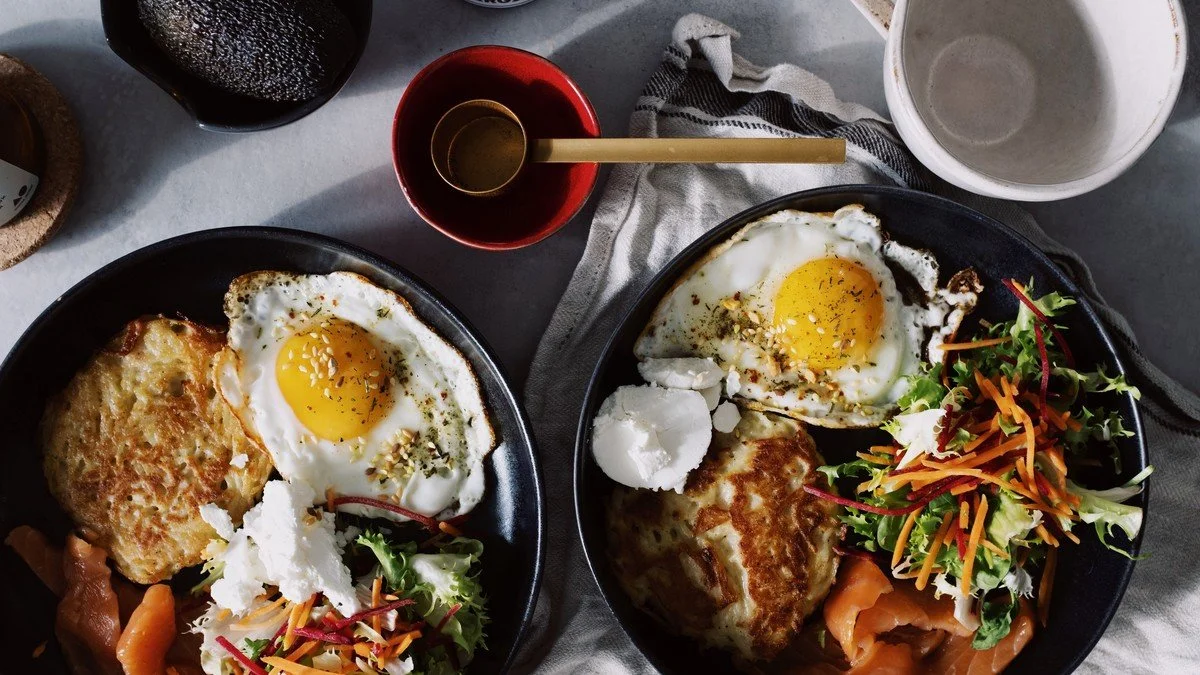
Pick the protein first, then build the rest of the plate around it.
Step 3: Build the rest of the plate
Once the anchor is chosen, add a carbohydrate staple (rice, potatoes, pasta, bread) and vegetables. Most of the meal’s protein is already done, so the rest is flavor and volume. If a meal comes up short, a small add-on closes the gap: an extra egg, a spoonful of cottage cheese, a handful of edamame.
A sample day, about 110 grams
Here’s the example filled in using only the foods in the table above. Protein from vegetables, bread and other sides is extra and not counted.
| Meal | What's in it | Protein |
|---|---|---|
| Breakfast | 2 eggs, a container of low-fat plain yogurt | ~21.5 g |
| Lunch | Canned salmon (3 oz) and black bean (1 cup) salad | ~34.8 g |
| Snack | Cottage cheese (4 oz) with fruit | ~14 g |
| Dinner | Tofu (½ cup) and edamame (1 cup) stir-fry over rice (1 cup) | ~39.3 g |
| Day total | ~110 g |
That sits inside the 84–112 g example range for a 70 kg adult. Swap any anchor for another from the table and the day still works: turkey breast for the salmon, cottage cheese for the yogurt.
Step 4: Repeat on purpose
You don’t need seven different days. Plan around two breakfasts, two or three lunches and four or five dinners, and let the anchors rotate. A week of repeats is cheaper to shop for and quicker to plan, and you’ve already checked the arithmetic on most of it.
Want the week built for you? Start your free 7-day trial.
Step 5: Build the grocery list from the plan
Write the meals first, then read the list off them. Add up the week: how many eggs, how many cans of beans, how many blocks of tofu. Protein staples keep well and mix and match: eggs, plain yogurt, cottage cheese, canned fish, beans, tofu and frozen edamame. You can add items to your grocery list straight from each recipe if you’re using MyNutriPlanner.
Keep a second list for restocking basics like oil and rice so nothing gets bought twice.
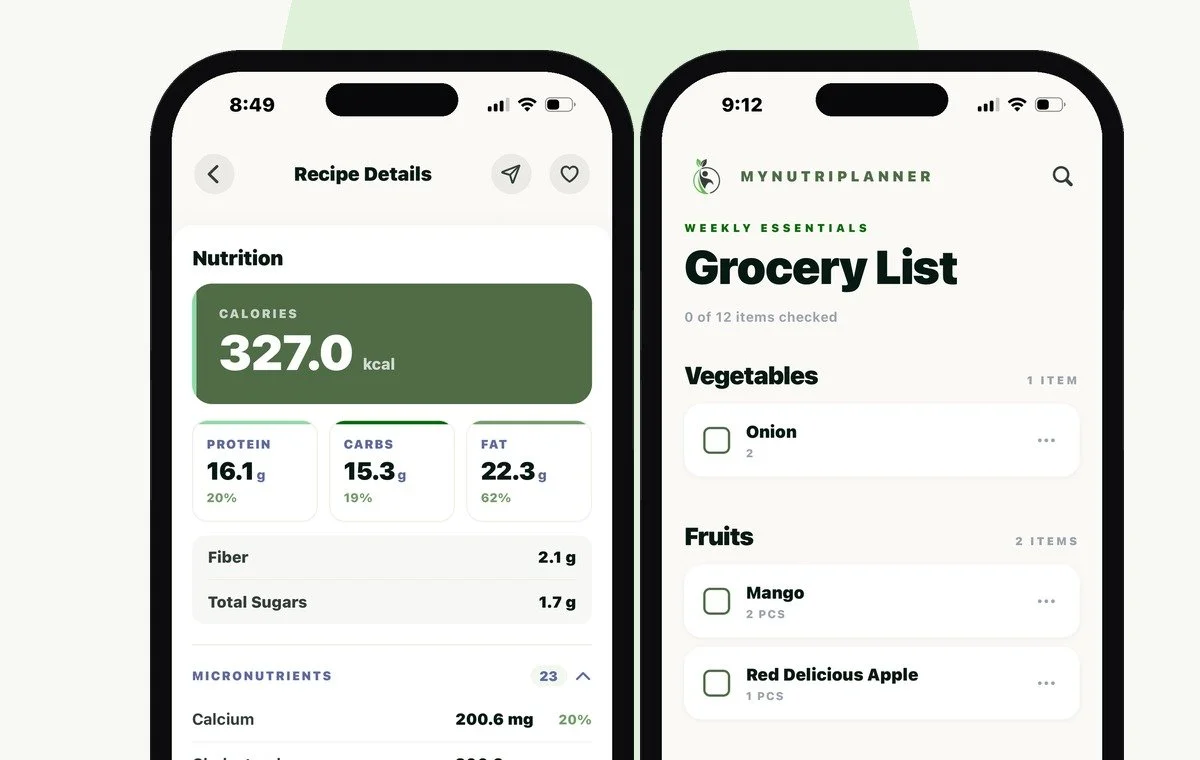
Plan first, list second: every protein anchor has a meal waiting for it.
Common mistakes
• Saving it all for dinner. If breakfast and lunch are light, dinner has to carry the day. Spread it across meals.
• Chasing the last gram. A day that lands near the number is doing its job. Think in weekly averages.
• Mixing raw and cooked weights. Rice and meat change weight when cooked, so check which one a figure refers to.
• Using one protein for everything. Variety makes the plan easier to stick with and easier to shop for.
• Planning seven new dinners. Repeat the ones that work and change two or three each week.
The shortcut
Everything above takes a spreadsheet and a free evening. It’s also the job MyNutriPlanner was built for.
Set your targets (the app calculates macros and micros with science-backed formulas, and you can adjust them), and Auto-Generate Week builds a seven-day plan from your filters and goals, drawing on more than 50,000 recipes. Swap or regenerate any meal, check each day’s protein in the planner, and the week turns into one grocery list grouped by aisle. See how the app helps you plan meals around your protein target.
Frequently asked questions
How much protein should I eat a day? The RDA is 0.8 g per kg of body weight [1], and the 2025–2030 Dietary Guidelines set a goal of 1.2–1.6 g per kg [2]. Your number may be higher if you’re trying to gain muscle mass. Which number fits you depends on your size, activity and preferences.
How many grams of protein per meal should I plan for? A simple approach is to divide your daily number across the meals you eat, so 100 g a day becomes roughly 25–35 g per main meal. The Dietary Guidelines advise prioritizing protein foods at every meal [2].
Do I need protein powder to follow a high-protein meal plan? The plan in this guide uses food only. Whether a supplement makes sense for you depends on your goals and needs. You can also ask a registered dietitian or healthcare provider.
Is a high-protein plan right for everyone? General guidance isn’t personal advice. If you have a medical condition or specific dietary needs, talk to a healthcare provider before changing how you eat.
Is there an app that builds a high-protein meal plan? Yes. MyNutriPlanner generates a full week from your filters and targets and builds the grocery list to match. It’s a planning and tracking tool, not medical advice.
Take the guesswork out of meals. Start your free 7-day trial of MyNutriPlanner and build your first week in minutes.
Sources
1. National Academies of Sciences, Engineering, and Medicine. Rethinking the Acceptable Macronutrient Distribution Range for the 21st Century: A Letter Report. National Academies Press, 2024. Chapter 4 (protein RDA of 0.8 g/kg and AMDR of 10–35% of calories). https://www.ncbi.nlm.nih.gov/books/NBK610328/
2. U.S. Department of Agriculture and U.S. Department of Health and Human Services. Dietary Guidelines for Americans, 2025–2030. p. 3, “Prioritize Protein Foods at Every Meal” (protein goal of 1.2–1.6 g per kg per day; protein food sources). https://cdn.realfood.gov/DGA.pdf
3. USDA National Agricultural Library. USDA National Nutrient Database for Standard Reference Legacy (2018): Protein (g) per measure. https://www.nal.usda.gov/sites/default/files/page-files/Protein.pdf
Nutrition values are rounded, vary by brand and preparation, and were checked on October 18, 2026.